Sep 5, 2026Buying Guides
How to Choose the Right Industrial Air Conditioner for a Factory or Commercial Kitchen?
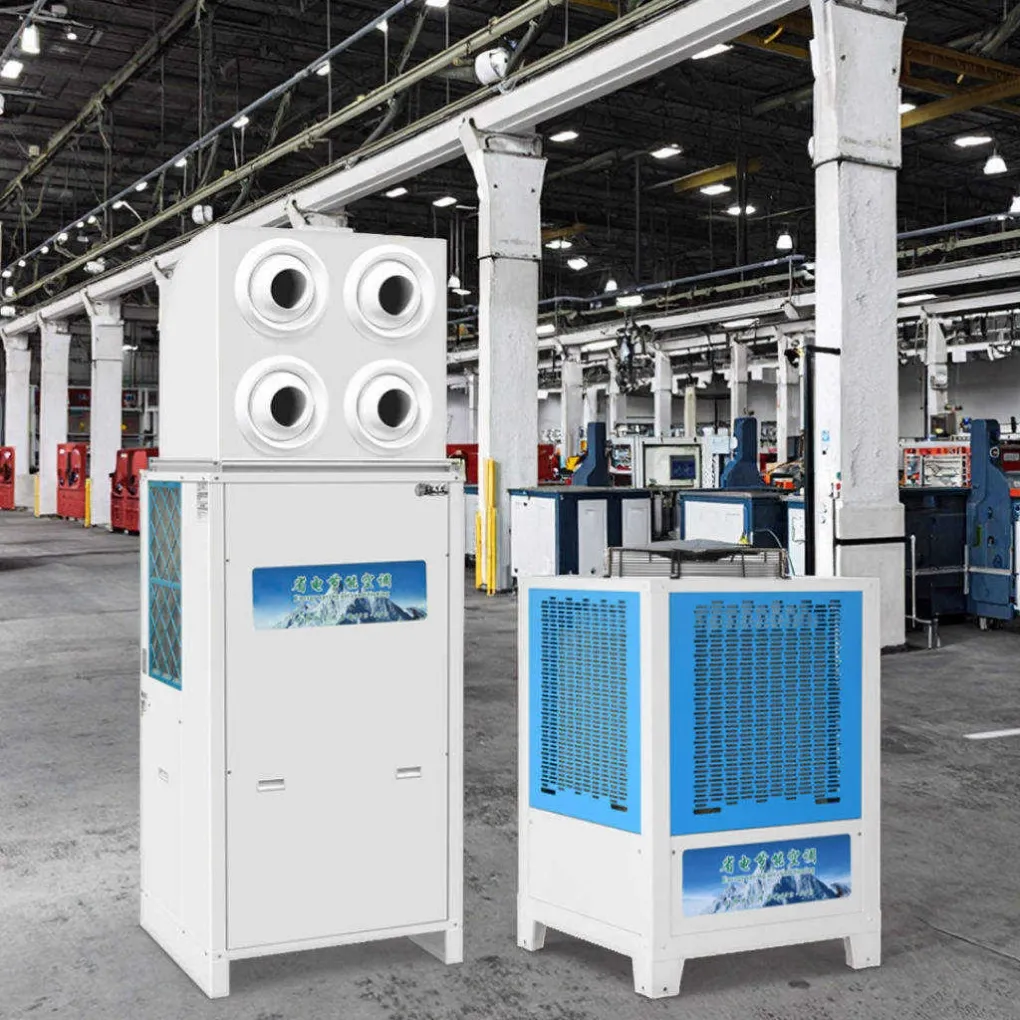
How to Choose the Right Industrial Air Conditioner for a Factory or Commercial Kitchen?
Meta Title: How to Choose the Right Industrial Air Conditioner for a Factory or Commercial Kitchen?
Meta Description: Learn how to choose the right industrial air conditioner for factories, warehouses and commercial kitchens. Discover how cooling load, heat sources, airflow, operating hours and installation conditions affect AC selection.
Suggested URL:
/blog/how-to-choose-the-right-industrial-air-conditionerChoosing an industrial air conditioner is very different from choosing an air conditioner for a bedroom or small office.
Factories, warehouses, workshops and commercial kitchens often have larger spaces, higher heat loads, longer operating hours and more demanding ventilation requirements. Selecting an air conditioner based only on room size or horsepower can therefore lead to poor cooling performance, unnecessary energy consumption or premature equipment problems.
A better approach is to evaluate the actual cooling load, heat sources, airflow requirements, operating conditions and installation environment before choosing the equipment.
This guide explains the key factors businesses should consider when selecting an industrial air conditioner.
1. Start With the Actual Cooling Load
The first question should not be:
“How many horsepower should the air conditioner be?”
The better question is:
“How much heat needs to be removed from the space?”
Cooling load is influenced by much more than floor area.
Important factors include:
- Building size
- Ceiling height
- Number of workers
- Machinery and equipment
- Lighting
- Outdoor temperature
- Solar heat
- Door opening frequency
- Ventilation
- Fresh-air requirements
- Cooking equipment
- Indoor temperature and humidity targets
ASHRAE's nonresidential cooling-load guidance treats internal heat sources and ventilation as important parts of commercial cooling-load calculations. Commercial kitchens are particularly challenging because cooking appliances can create sensible and latent heat gains that directly affect the cooling load.
This means that two rooms with the same floor area can require very different air-conditioning capacities.
2. Consider the Heat Generated by Machinery
Factories and workshops often contain equipment that continuously produces heat.
Examples include:
- Production machines
- Motors
- Compressors
- Welding equipment
- Ovens
- Furnaces
- Electrical equipment
The greater the internal heat generation, the greater the cooling requirement.
For example, a production area with several continuously operating machines may require significantly more cooling than an office of the same size.
When selecting an industrial air conditioner, it is therefore important to provide the equipment supplier with information about the machinery and its operating schedule.
3. Commercial Kitchens Need Special Attention
Commercial kitchens are among the most difficult spaces to cool.
Cooking appliances generate radiant, convective and latent heat. Depending on how appliances are ventilated, part of that heat may be removed through the exhaust system while another portion remains a cooling load for the kitchen.
At the same time, commercial kitchens typically use exhaust hoods to remove smoke, grease, heat and cooking effluent.
ASHRAE describes commercial kitchen ventilation as an interconnected system involving:
Cooling + Exhaust + Replacement Air + Air Distribution
The design of one part can affect the performance and energy use of the others.
This is why a commercial kitchen air conditioner should not be selected simply according to square footage.
4. Understand the Relationship Between Exhaust and Cooling
This is one of the most important factors in commercial kitchen air-conditioning design.
When a kitchen exhaust fan removes a large amount of air, replacement air must enter the building.
If that incoming air is hot and humid during summer, the air-conditioning system may have to cool and dehumidify it.
ASHRAE notes that commercial kitchen ventilation systems must account for replacement air, exhaust airflow, internal heat gains and HVAC interaction when designing the system.
In practical terms:
More exhaust → More replacement air → Potentially higher cooling load
Therefore, the air conditioner should be considered together with the kitchen's exhaust and makeup-air system rather than as a completely independent piece of equipment.
5. Pay Attention to Airflow
Cooling capacity is only part of the solution.
Large industrial areas may require strong and well-distributed airflow to move conditioned air throughout the space.
Poor air distribution can result in:
- Hot spots
- Uneven temperatures
- Poor worker comfort
- Excessive operating time
- Increased energy consumption
This is particularly important in spaces with high ceilings or large open production areas.
For commercial kitchens, airflow is even more critical because heat is continuously generated around cooking equipment.
A heavy-duty commercial kitchen air conditioner should therefore provide not only adequate cooling capacity but also an airflow pattern suitable for the application.
6. Check the Operating Hours
How long will the air conditioner operate every day?
This question has a major impact on equipment selection.
A small office may use air conditioning for several hours a day, while a factory or commercial kitchen may operate for 10, 12 or even more hours per day.
Long operating hours mean that energy efficiency, reliability and maintenance requirements become increasingly important.
For businesses, the purchase price is only part of the total cost.
A more useful calculation is:
Total Cost = Purchase + Installation + Electricity + Maintenance + Downtime
An air conditioner with a slightly higher initial cost may provide better overall value if it performs efficiently and reliably over a long operating life.
7. Consider the Installation Environment
Before selecting an industrial air conditioner, examine the environment where it will be installed.
Important questions include:
Is the Space Dusty?
Factories may have higher levels of dust and airborne particles than offices.
Is There High Ambient Temperature?
Outdoor temperatures influence condenser performance and system operating conditions.
Is There Grease or Cooking Fume?
Commercial kitchens have unique requirements because of cooking grease, smoke and moisture.
Is There Limited Wall Space?
A floor-standing cabinet air conditioner may be more practical than a wall-mounted unit in some commercial applications.
Is the Space Open or Divided?
An open workshop may require a different airflow strategy from a series of enclosed rooms.
A professional equipment supplier should evaluate the installation environment before recommending a specific system.
8. Floor-Standing Industrial Air Conditioners
Floor-standing cabinet air conditioners are commonly considered for larger commercial and industrial spaces because they can provide substantial cooling capacity while using a practical floor-mounted configuration.
Yufeng's published floor-standing air-conditioning products are positioned for applications including:
- Factories
- Warehouses
- Hotels
- Hospitals
- Schools
- Offices
Published product information for Yufeng models includes R410A refrigerant, Lingda compressors, AC fan motors and floor-standing installation.
For facilities where wall-mounted residential equipment is insufficient, a heavy-duty floor-standing system can be a practical alternative.
9. Choose the Right Air Conditioner for Commercial Kitchens
A commercial kitchen has a different cooling profile from a factory or warehouse.
The system needs to operate alongside:
- Cooking equipment
- Exhaust hoods
- Makeup-air systems
- Refrigeration equipment
- Workers
- Lighting
- Doors and service openings
Yufeng's commercial kitchen air-conditioning product range is designed around demanding kitchen environments. Published product descriptions emphasize high air volume, fast cooling and anti-fume performance, with heavy-duty split systems intended for commercial kitchens.
These characteristics are particularly relevant when standard residential air conditioners are unable to maintain comfortable conditions in a high-heat cooking environment.
10. Energy Efficiency Should Be Evaluated at System Level
An energy-saving air conditioner is not simply an air conditioner with a “high-efficiency compressor.”
Overall energy performance depends on the complete system.
Consider:
Compressor efficiency
Heat exchanger performance
Fan efficiency
Airflow design
Control strategy
Equipment sizing
Installation quality
Maintenance
The U.S. Department of Energy notes that equipment capable of modulating cooling output and airflow can reduce energy consumption during partial-load conditions by better matching system output to actual demand.
This is an important concept for facilities where cooling requirements vary throughout the day.
11. Do Not Automatically Choose the Largest Model
A common mistake in industrial cooling projects is simply choosing the largest available unit.
Bigger is not always better.
If the equipment is significantly oversized, it may not operate in the most efficient way under actual load conditions. At the same time, an undersized system may run continuously without maintaining the required temperature.
The best approach is to select a system based on an appropriate cooling-load assessment.
A supplier will typically need information such as:
- Room dimensions
- Ceiling height
- Location
- Outdoor design temperature
- Target indoor temperature
- Number of workers
- Main heat-generating equipment
- Kitchen appliances
- Ventilation/exhaust airflow
- Daily operating hours
The more accurate the information, the more appropriate the equipment recommendation can be.
12. Yufeng Industrial Air-Conditioning Solutions
Yufeng focuses on industrial and commercial cooling applications where reliable performance and practical operating costs are important.
Our product range includes:
Industrial Energy-Saving Air Conditioners
Suitable for factories, warehouses, workshops and other commercial spaces requiring heavy-duty cooling.
Floor-Standing Cabinet Air Conditioners
Designed for larger spaces where strong cooling performance and floor-standing installation are preferred.
Commercial Kitchen Air Conditioners
Developed for high-heat kitchen environments where high airflow, fast cooling and practical operation are important.
Yufeng's product portfolio is intended to provide cooling solutions for demanding commercial and industrial environments rather than ordinary residential applications.
13. What Information Should You Give an Air Conditioner Manufacturer?
When requesting a quotation, providing complete project information can significantly improve the accuracy of the recommendation.
A useful inquiry should include:
Application: Factory / Warehouse / Workshop / Commercial Kitchen / Restaurant / Other
Room Size: Length × Width × Height
Location: City and Country
Indoor Target Temperature: For example, 24°C
Outdoor Temperature: Approximate summer maximum
Heat Sources: Machines, ovens, fryers, furnaces, etc.
Number of Workers: Approximate number during operation
Operating Hours: Hours per day
Ventilation: Exhaust or fresh-air system information
Installation Preference: Wall-mounted / Floor-standing / Other
With this information, an air-conditioning manufacturer can make a much more useful recommendation than simply quoting a unit based on horsepower.
Conclusion
Choosing the right industrial air conditioner requires more than looking at room size.
The best system should be selected according to the actual cooling load, heat sources, airflow requirements, operating hours, ventilation system and installation environment.
This is especially important for commercial kitchens, where cooling, exhaust and replacement air systems work together as part of a larger HVAC system.
For factories, warehouses and commercial kitchens, Yufeng provides industrial and commercial air-conditioning solutions designed for demanding cooling applications.
Whether you need a floor-standing cabinet air conditioner for a factory or warehouse or a heavy-duty commercial kitchen air conditioner for a high-heat cooking environment, choosing the correct system from the beginning can help improve comfort, reliability and long-term operating performance.
Looking for an industrial air conditioner for your project? Contact Yufeng and provide your application, room dimensions and operating conditions. Our team can help you identify a suitable cooling solution.