Sep 5, 2026
How Does an Industrial Energy-Saving Air Conditioner Work?
How Does an Industrial Energy-Saving Air Conditioner Work?
Industrial and commercial spaces have very different cooling requirements from residential buildings. A factory floor, warehouse, workshop, restaurant kitchen, or food-processing area may have a large open space, high heat loads, long operating hours, and continuously changing cooling requirements.
For these applications, simply choosing a larger air conditioner does not necessarily mean better cooling or lower operating costs. An industrial energy-saving air conditioner is designed to match cooling capacity with actual heat loads while maintaining stable indoor temperatures.
But how does an energy-saving industrial air conditioner actually work?
Let us look at the basic refrigeration cycle, the main energy-consuming components, and the technologies that can improve overall system efficiency.
1. The Basic Working Principle of an Industrial Air Conditioner
An industrial air conditioner works according to the refrigeration cycle.
The system generally consists of four key components:
Compressor → Condenser → Expansion Device → Evaporator
The refrigerant circulates continuously through these components to transfer heat from the indoor environment to the outside.
Step 1: The Compressor
The compressor is one of the most important components in an air-conditioning system.
It compresses low-pressure refrigerant vapor into a high-pressure, high-temperature gas. This increases the refrigerant's temperature and pressure so that heat can later be released through the condenser.
Because the compressor directly affects the power consumption of the refrigeration system, compressor efficiency is an important factor when evaluating an industrial air conditioner.
DOE regulations also recognize the importance of compressor efficiency and establish energy conservation requirements for commercial and industrial compressor equipment.
Step 2: The Condenser
The hot, high-pressure refrigerant then flows through the condenser.
Here, heat is rejected to the surrounding environment. As the refrigerant loses heat, it changes from a gas into a liquid.
A clean and efficient condenser is essential for stable operation. Poor heat rejection forces the refrigeration system to work harder and can increase energy consumption.
Step 3: The Expansion Device
The liquid refrigerant passes through an expansion device, where its pressure drops rapidly.
This process reduces the refrigerant's temperature and prepares it for the cooling stage.
Step 4: The Evaporator
The cold refrigerant enters the evaporator.
Indoor air passes across the evaporator coil, and heat is absorbed by the refrigerant. The cooled air is then distributed back into the industrial or commercial space.
The refrigerant returns to the compressor, and the cycle repeats.
In simple terms:
The air conditioner does not “create cold.” It removes heat from the indoor environment and releases that heat outside.
2. Why Is Energy Efficiency Important in Industrial Cooling?
Industrial and commercial air conditioners often operate for many hours per day. In some factories, production facilities, kitchens, and warehouses, cooling may be required throughout most of the working day.
This means the electricity used by the HVAC system can become a significant part of operating costs.
For example, a cooling system that operates continuously at partial load does not necessarily need to run at maximum capacity all the time. A more efficient system can adjust its operation according to actual cooling demand.
DOE notes that modulating compressors and multi-speed fans can reduce energy use at partial loads by matching cooling capacity and airflow more closely to demand.
This is one of the fundamental principles behind energy-saving air-conditioning design.
3. What Makes an Industrial Air Conditioner Energy Efficient?
Energy efficiency is not determined by one component alone. It is the result of several factors working together.
Efficient Compressor
The compressor is usually one of the major electrical loads in a refrigeration system.
A properly selected compressor can provide the required cooling capacity without unnecessary energy consumption.
For industrial applications, the compressor must also be selected according to:
- Cooling capacity
- Operating hours
- Ambient temperature
- Refrigerant
- Required indoor temperature
- Expected load conditions
Efficient Heat Exchange
Both evaporators and condensers need to transfer heat effectively.
Dirty coils, restricted airflow, excessive dust, or poor installation can reduce heat-transfer efficiency and force the compressor to work harder.
This is why regular maintenance matters as much as initial equipment selection.
Proper Airflow
Airflow determines how effectively cooled air reaches the working area.
A system with insufficient airflow may leave hot spots, while excessive airflow can waste energy and create unnecessary drafts.
For industrial kitchens and other high-heat environments, high-volume air distribution can be particularly important.
Your Yufeng commercial kitchen units are positioned around this requirement, with product listings emphasizing high air volume, anti-fume performance, and fast cooling for heavy-duty kitchen environments.
Matching Capacity to the Actual Load
Oversized equipment is not automatically more efficient.
The proper cooling capacity should consider:
- Building size
- Ceiling height
- Number of workers
- Heat-generating machinery
- Cooking equipment
- Outdoor climate
- Door opening frequency
- Ventilation and exhaust
- Required indoor temperature
A well-sized air conditioner can maintain comfort without constantly cycling between extreme operating conditions.
4. Why Industrial Kitchens Are Especially Challenging
Commercial kitchens are among the most demanding environments for air conditioning.
Ovens, fryers, grills, steamers, cooking equipment, workers, and lighting all generate heat. At the same time, kitchen exhaust systems continuously remove air from the building.
That combination creates a very different cooling environment from a typical office.
The U.S. Department of Energy's commercial kitchen guidance highlights the importance of reducing unnecessary heat released into kitchen spaces, because lower kitchen heat loads also reduce the cooling load placed on the air-conditioning system.
This is why commercial kitchen air conditioners need to focus on more than simple room temperature control.
They need to provide:
High cooling performance + Strong airflow + Reliable operation + Easy maintenance
5. Yufeng Industrial Energy-Saving Air Conditioners
Yufeng focuses on industrial and commercial cooling applications where reliable temperature control and practical operating costs are important.
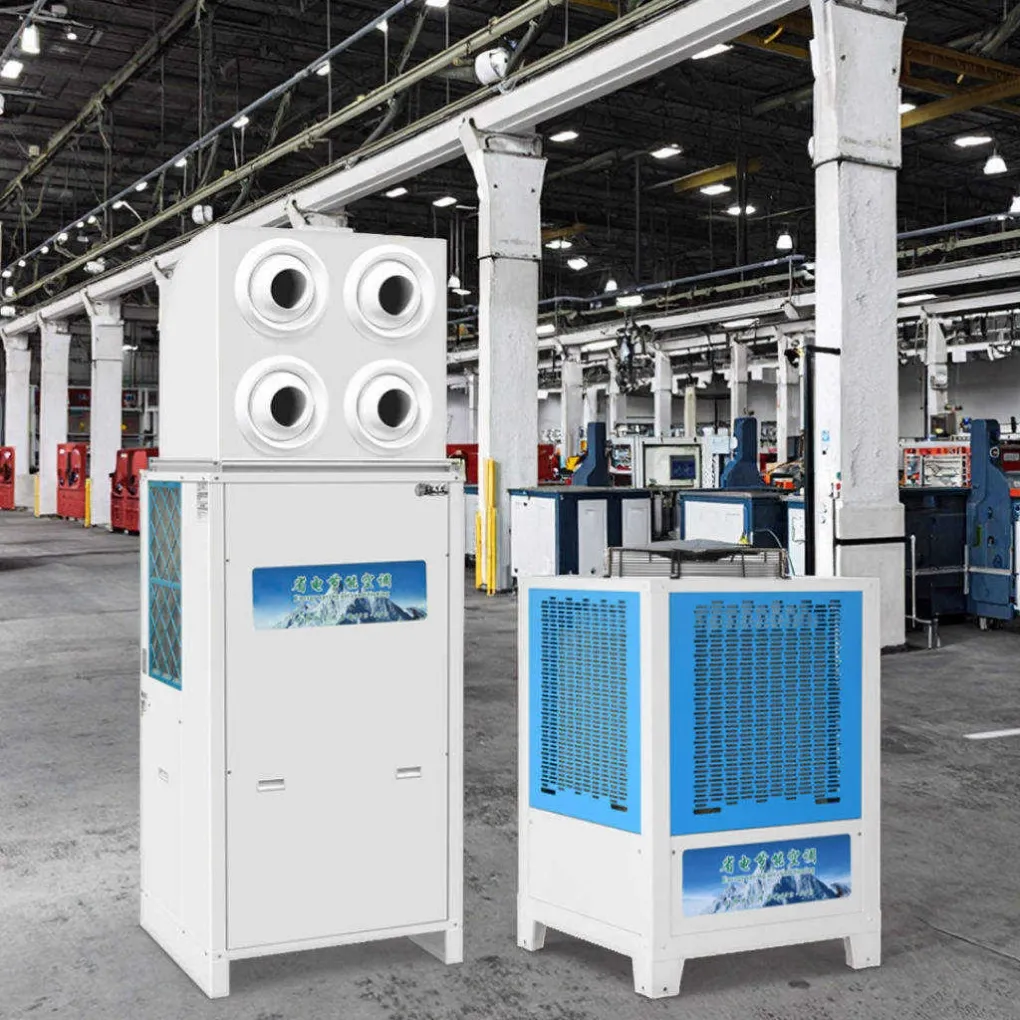
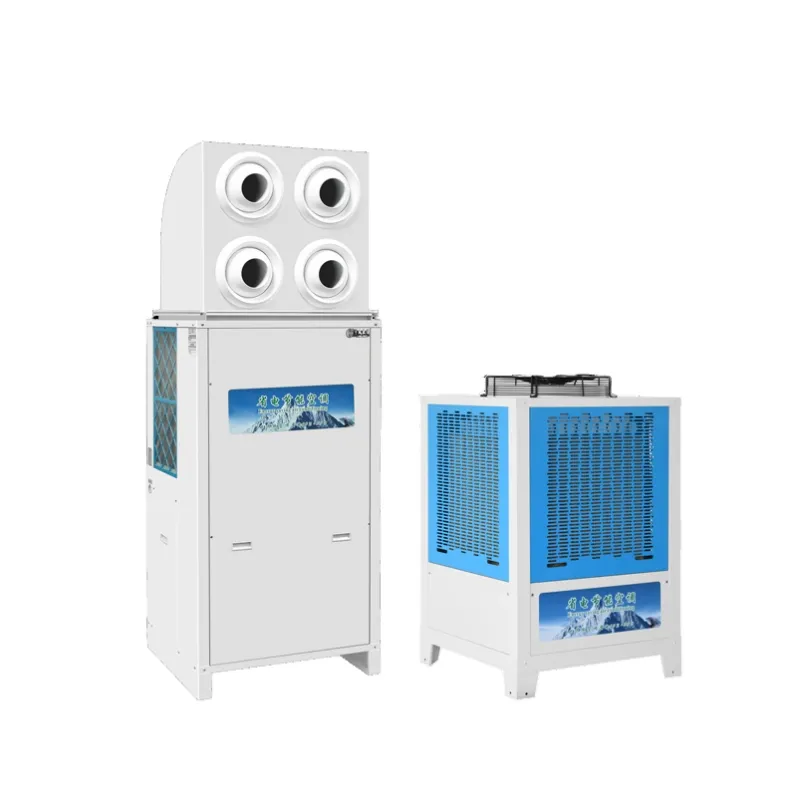
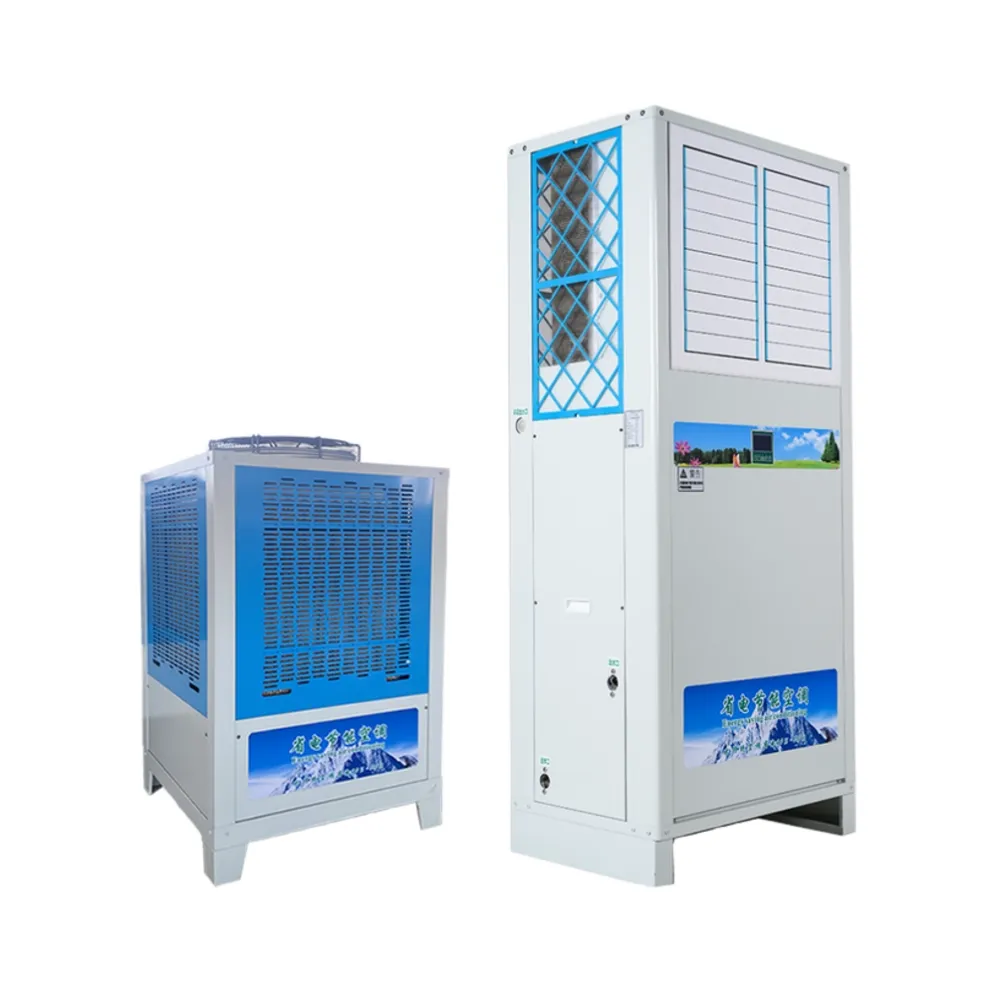
Our product range includes energy-saving floor-standing cabinet air conditioners and heavy-duty commercial kitchen air-conditioning systems.
Public product specifications for Yufeng floor-standing models include:
- R410A refrigerant
- Lingda compressor
- AC fan motor
- Floor-standing installation
- Applications in factories, warehouses, hospitals, hotels, schools, and offices
- Automatic operation
- Low maintenance cost
- Easy operation
For commercial kitchens, Yufeng also offers heavy-duty split air-conditioning systems designed around high heat-load applications. One listed model is a 2P heavy-duty split wall-mounted commercial kitchen air conditioner featuring anti-fume design, high air volume, and fast cooling.
This makes Yufeng products suitable for applications where standard residential air conditioners may not provide the required combination of airflow, cooling capacity and durability.
6. How to Reduce Industrial Air-Conditioning Energy Consumption
Buying an energy-efficient air conditioner is only the first step.
Actual energy savings also depend on system design and operation.
Keep Condenser Coils Clean
Dust and dirt reduce heat-transfer efficiency.
Regular cleaning helps the system reject heat more effectively.
Maintain Proper Airflow
Blocked filters or obstructed air outlets can reduce cooling performance and increase system workload.
Reduce Unnecessary Heat Loads
Better kitchen equipment, insulation, ventilation management and shading can reduce the amount of heat that the air conditioner needs to remove.
Use Temperature Controls Correctly
Lowering the thermostat far below the required temperature usually increases energy use without providing meaningful additional benefits.
Choose the Right Equipment
A properly selected industrial air conditioner should be based on the actual cooling load rather than simply choosing the largest available unit.
7. Conclusion
An industrial energy-saving air conditioner works by transferring heat from the indoor environment to the outside through the refrigeration cycle.
Its energy efficiency depends on several factors, including:
Compressor efficiency, heat exchange, airflow, capacity control, equipment sizing, installation and maintenance.
For industrial plants, warehouses and commercial kitchens, the right cooling system should be designed around the actual operating environment rather than treated as a larger version of a household air conditioner.
For businesses looking for heavy-duty industrial cooling or commercial kitchen air conditioning, Yufeng provides a range of energy-saving cooling solutions designed for demanding commercial and industrial applications.
Looking for the right industrial air conditioner for your project? Contact Yufeng for product specifications and a suitable cooling solution.