Sep 5, 2026
Industrial Air Conditioner vs. Standard Air Conditioner: What Is the Difference?
Industrial Air Conditioner vs. Standard Air Conditioner: What Is the Difference?
When a factory, warehouse, workshop, restaurant or commercial kitchen becomes too hot, many business owners initially consider using a standard residential air conditioner.
It may seem like a simple solution.
But industrial and commercial environments can have much higher cooling loads, larger spaces, longer operating hours and harsher working conditions.
As a result, an air conditioner designed for a home or small office may not always be the most appropriate solution.
So, what is the difference between an industrial air conditioner and a standard air conditioner?
1. Different Cooling Requirements
The most obvious difference is the cooling load.
A residential air conditioner is generally designed for relatively predictable conditions:
- Moderate room size
- Limited heat-generating equipment
- Shorter operating periods
- Lower occupancy density
Industrial environments can be very different.
A factory may contain:
- Production machines
- Motors
- Compressors
- Furnaces
- Lighting
- Large numbers of workers
A commercial kitchen adds another major source of heat:
- Ovens
- Fryers
- Grills
- Steam equipment
- Exhaust systems
Commercial kitchen equipment can introduce significant heat into the conditioned space, increasing the cooling load on the HVAC system. DOE guidance specifically notes that reducing heat released by cooking equipment can reduce the air-conditioning load.
2. Industrial Air Conditioners Are Built for Heavy-Duty Operation
Industrial cooling equipment is normally selected for more demanding operating conditions.
Depending on the application, an industrial air conditioner may need to operate:
- For long hours
- In large spaces
- At high ambient temperatures
- Around dust or heat-generating equipment
- With frequent door opening
- In environments with high heat loads
The system therefore needs to provide stable cooling rather than simply short-term comfort.
Commercial and industrial air-conditioning equipment is recognized as a distinct equipment category by the U.S. Department of Energy, which sets specific efficiency standards and test procedures for commercial package air conditioners and heat pumps.
3. Airflow Is Critical
Cooling capacity is important, but airflow is equally important in a large industrial environment.
Imagine a large production workshop with a high ceiling.
Cold air released from a small wall-mounted residential unit may not effectively reach every part of the space.
An industrial system needs to distribute cooling air over a larger area and maintain a more consistent temperature.
This is particularly important for commercial kitchens.
Hot air is continuously generated around cooking equipment, while exhaust systems remove air from the kitchen. Effective air distribution therefore becomes an important part of the cooling strategy.
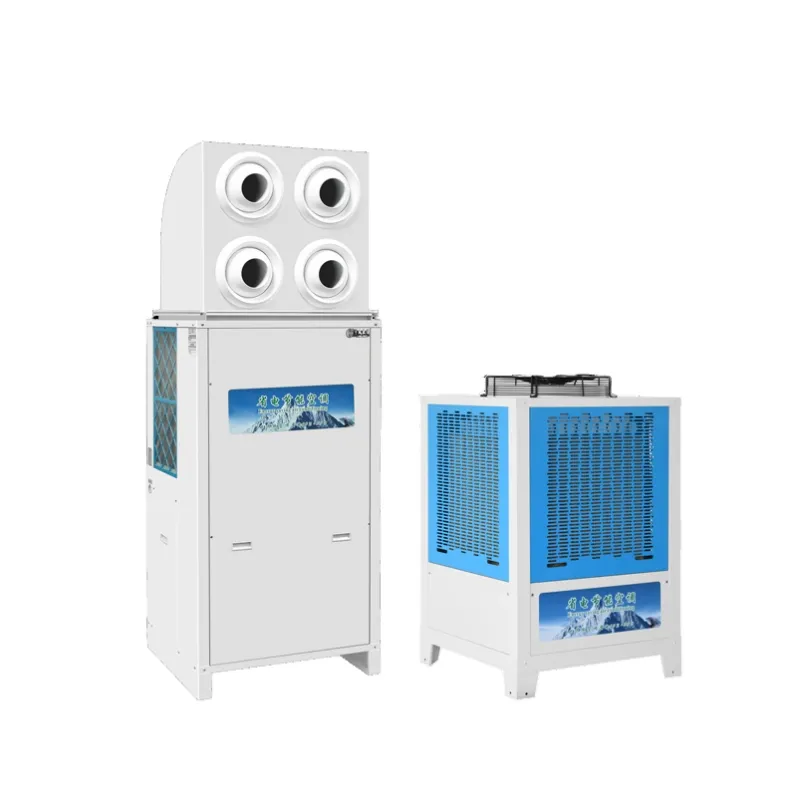
Yufeng's commercial kitchen air-conditioning products include heavy-duty split systems that emphasize high air volume and fast cooling, specifically for demanding kitchen environments.
4. Industrial Air Conditioners Can Be More Suitable for Large Spaces
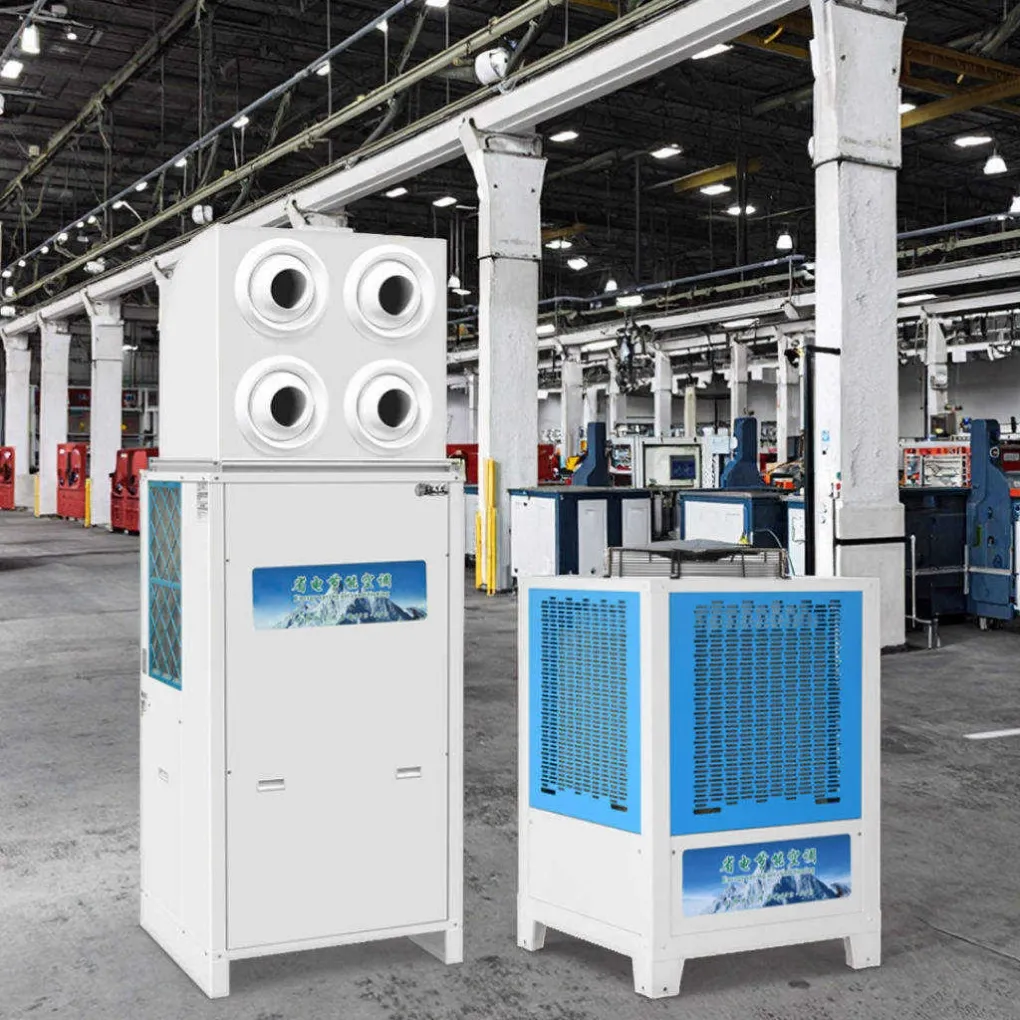
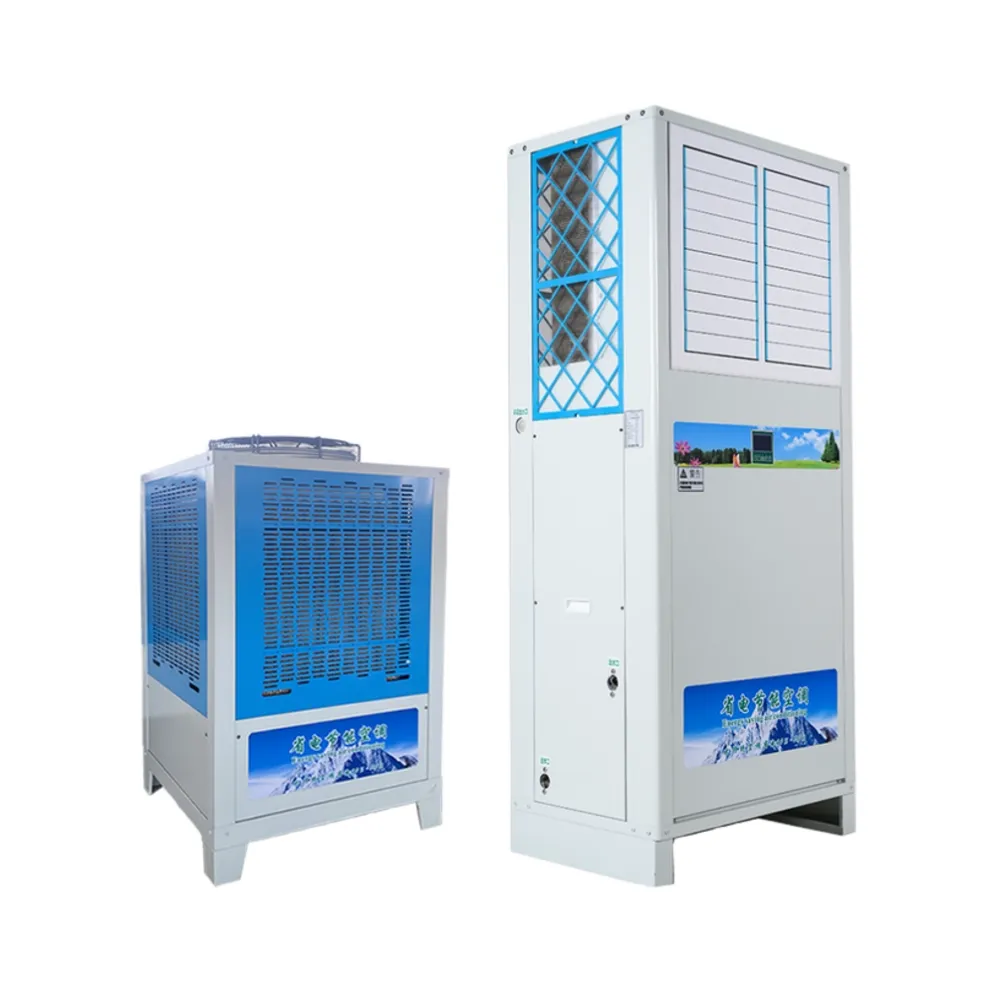
Floor-standing cabinet air conditioners are one example of equipment commonly used for larger commercial and industrial applications.
Yufeng's published floor-standing models include large cabinet-style units with applications listed for factories, warehouses, hotels, hospitals, schools and offices. One published model measures 770 × 530 × 1810 mm and uses R410 refrigerant and a Lingda compressor.
The floor-standing configuration can be useful where wall-mounted equipment is inconvenient or where higher cooling output is required.
5. Energy Saving Is About More Than Electricity Consumption
When people hear "energy-saving air conditioner," they often think only about the compressor.
In reality, overall efficiency depends on the complete system.
Important factors include:
Compressor + Fan + Heat Exchanger + Airflow + Controls + Installation + Maintenance
For example, DOE guidance points out that modulating compressors and two-speed fans can reduce energy consumption under partial-load conditions, because the system can better match output with actual cooling demand.
Therefore, an energy-saving industrial air conditioner should be evaluated based on its overall system performance rather than one marketing specification.
6. Industrial vs. Standard Air Conditioner: A Quick Comparison
Feature | Standard Residential AC | Industrial / Commercial AC |
|---|---|---|
Typical application | Homes, small offices | Factories, warehouses, kitchens |
Cooling load | Low to moderate | Moderate to very high |
Operating hours | Intermittent | Long operating periods |
Airflow requirements | Standard | High-volume / large-area distribution |
Heat load | Relatively predictable | Often high and variable |
Installation | Residential-focused | Commercial / industrial-focused |
Durability requirements | Normal | Heavy-duty |
Maintenance | Standard | Frequent professional maintenance |
Space coverage | Small to medium | Medium to large |
The exact performance of any system depends on its model, installation and operating conditions, so equipment should always be selected according to the actual application.
7. When Should You Consider an Industrial Air Conditioner?
An industrial or heavy-duty commercial air conditioner may be more appropriate when your facility has one or more of the following conditions:
Large Indoor Space
Factories and warehouses may have large floor areas and high ceilings that require greater airflow and cooling capacity.
High Heat Loads
Production equipment, ovens, furnaces, cooking equipment and machinery can significantly increase indoor temperatures.
Long Operating Hours
A system running continuously places greater importance on efficiency and reliability.
Commercial Kitchen Applications
Kitchen environments combine heat generation with ventilation and exhaust requirements, making cooling much more demanding than a typical room.
Need for Heavy-Duty Cooling
If standard residential equipment struggles to maintain temperature, a dedicated commercial or industrial system should be evaluated.
8. Yufeng: Industrial Cooling Solutions for Demanding Environments
Yufeng's industrial air-conditioning product range is focused on applications where standard comfort cooling may not be enough.
The company's published products include:
Energy-Saving Floor-Standing Cabinet Air Conditioners
Designed for applications such as factories, warehouses, offices, hotels, hospitals and schools. Published specifications include R410A refrigerant, Lingda compressor and floor-standing installation.
Heavy-Duty Commercial Kitchen Air Conditioners
Designed for commercial kitchen environments with high heat loads, with published product descriptions highlighting anti-fume performance, high air volume and fast cooling.
Yufeng also has commercial kitchen split air-conditioning products described as using high-power cooling technology and designed specifically for commercial kitchen applications.
9. How to Select the Right Industrial Air Conditioner
Choosing the right industrial AC requires more than looking at horsepower.
Before purchasing, consider:
1. What Is the Room Size?
Calculate the approximate area and ceiling height.
2. What Is the Heat Load?
Consider machines, cooking equipment, workers, lighting and other heat sources.
3. How Many Hours Will the AC Operate?
A system running 12–24 hours per day should prioritize efficiency and reliability.
4. What Is the Local Climate?
Outdoor temperature and humidity affect air-conditioning performance and equipment selection.
5. What Type of Ventilation System Is Used?
In kitchens and industrial facilities, exhaust and fresh-air systems can have a major impact on cooling requirements.
6. What Type of Airflow Is Needed?
Large spaces may require stronger airflow and carefully designed air distribution.
Conclusion
The main difference between a standard air conditioner and an industrial air conditioner is not simply size.
It is the ability to handle higher cooling loads, longer operating hours, larger spaces, stronger airflow requirements and more demanding working environments.
For factories, warehouses and commercial kitchens, selecting the correct cooling system can improve working conditions while helping businesses manage long-term operating costs.
Yufeng provides industrial energy-saving air conditioners and heavy-duty commercial kitchen air-conditioning solutions for a range of commercial and industrial applications.
Need help choosing the right model? Contact Yufeng with your room size, application, local climate and operating conditions, and our team can recommend a suitable cooling solution.